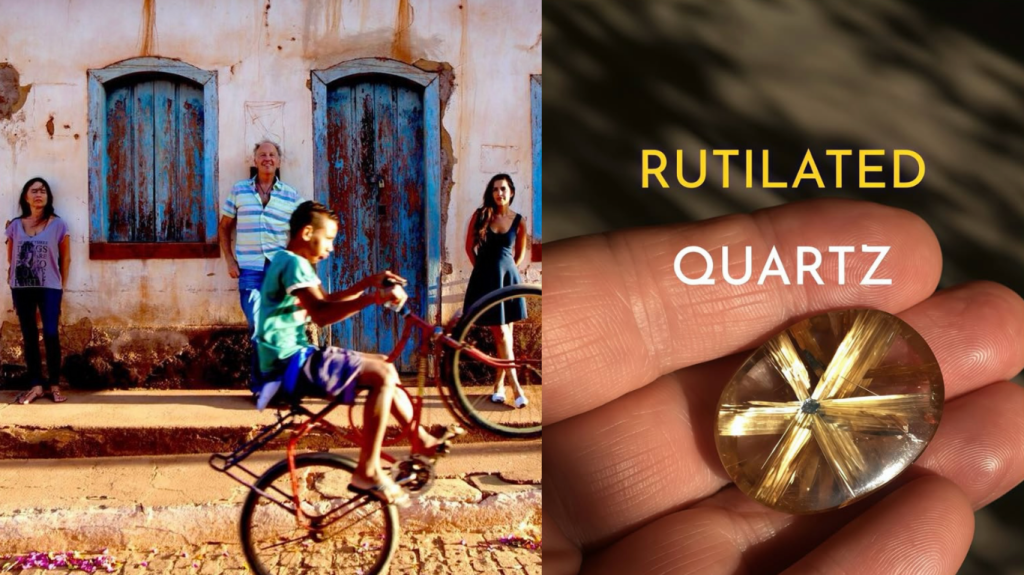
Bahia, Brazil. A state the size of France, teeming with natural resources and gems like the mesmerizing rutilated quartz you see above. Novo Horizonte is a small town deep within the state where a new initiative called Academia da Serra has been born. A passionate team of entrepreneurs, artisans, geologists, jewelry designers and even a crystal shop owner have come together to start a lapidary (gem tumbling and faceting) and land stewardship vocational school.
The Academia’s mission involves four key areas:
#1. Improving the health and safety of miners through education and PPE (personal protective equipment).
#2. Helping women and youth learn lapidary and business skills so they benefit from the mineral resource and add value to the local economy.
#3. Implementing mine to market traceability solutions for crystals and gemstones to help consumers make informed choices.
#4. Investing in regenerative agriculture projects to replenish nature and diversify the economy before mine deposits are exhausted.

The first phase of the Academia is a program called Stepping Stones, which will teach women in the Novo Horizonte community to create tumbled quartz crystals and beads. According to the program’s current GoFundMe fundraiser,
“the donations will fund tumbling machines, drills, rough stone purchasing, and instructions for the first cohort of women participating in the Academia. Sales from the Academia will be reinvested to expand the Academia, eventually providing opportunities for growth and income to the participants.”
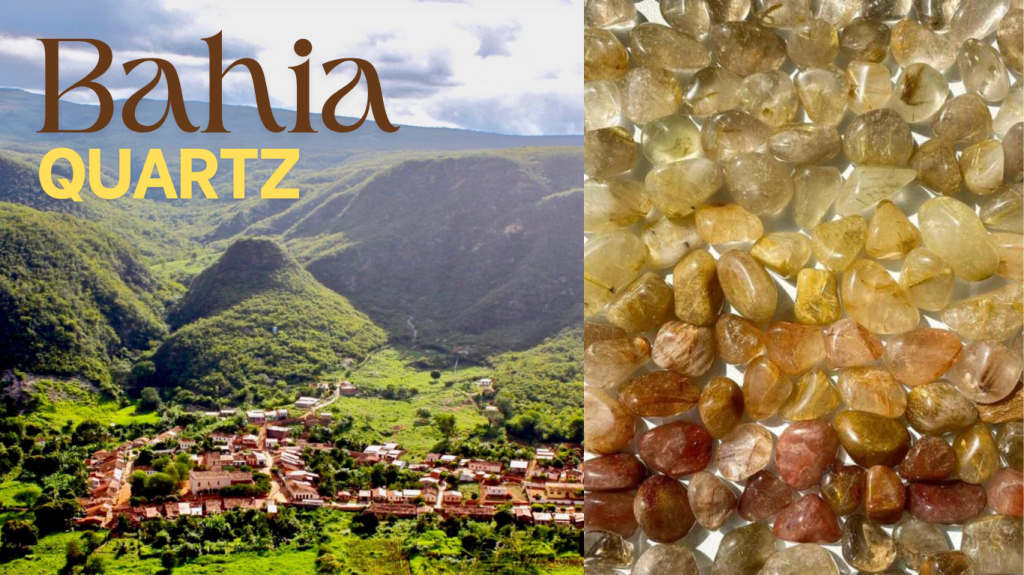
I caught up with Academia guide Brian Cook of Nature’s Geometry as well as Renata Cambaúva, a jewelry designer who is donating 10% of all her sales to this initiative, to get even more details on why Bahia and why they have chosen to get involved.
Chloe Beaumont: Hi Brian! Why is a lapidary school so needed in Bahia?
Brian Cook: With the tremendous varieties of exotic quartz including golden rutilated quartz, dumortierite quartz, sand and argilic-included quartz of various colors, amethyst, citrine, smoky, rose quartz, various jaspers, emerald, beryl, and decorative stone…….99% of these gems leave the state and country. Novo Horizonte, where we mine the golden rutilated and smoky quartz, is centrally located. It makes so much sense to create the skill opportunities in processing and cutting these gems to service the domestic and international demands [for these gems]. The added value improves the lives of these people who toil so hard to give our industry the stones we need and love. Entrepreneurship leads to micro industries in the community for gemstones as well as jewelry creations.
By the way, I’ve been preaching this kind of investment in ASM (artisanal and small scale mining) communities for a couple decades now. Finally (in the last 5-6 years) the industry is interested. The ICA Congress in Brasilia this year, CIBJO annual meeting, Conclave, Chicago Responsible Jewelry Conference, etc all featured responsible sourcing and the impact to artisanal mining communities. The industry needs good and real stories adding relevance to our creations, and we depend on these communities that supply the raw materials that the industry stands on. I delivered a gentle push in a talk I gave in Brasilia; I tasked the Brazilian government and the industry leaders to support our mining and cutting communities.
CB: Where are the tumbled gems from the Stepping Stones program going to be sold (in Brazil or just the US?)
BC: Tumbled stones are quite difficult to trace. Thus, having a direct source makes sense for the initiation of the Academia da Serra. Jill Urwin, one of our advisors and first investor, of She’s Lost Control has an amazing network in the U.K which will provide an immediate market for tumbled stones. Once production begins the initial supporters of the project will be able to access these resources on a priority basis.
CB: Will there be an opportunity for people to come visit this area and see the work that’s being done?
BC: Yes. As part of our initiative we will create an amazing infrastructure specifically for visitors. I have gotten many requests to visit these cultures, geology, and biomes, such as artisan makers of jewelry and the universities interested in research (University of Arizona) and unique studies in geology, botany, ethnobotany. It will feature adobe structures (as they used to be) with modern improvements for communications and a local garden. To get there, we need fans that want to help [by fundraising and donating.]
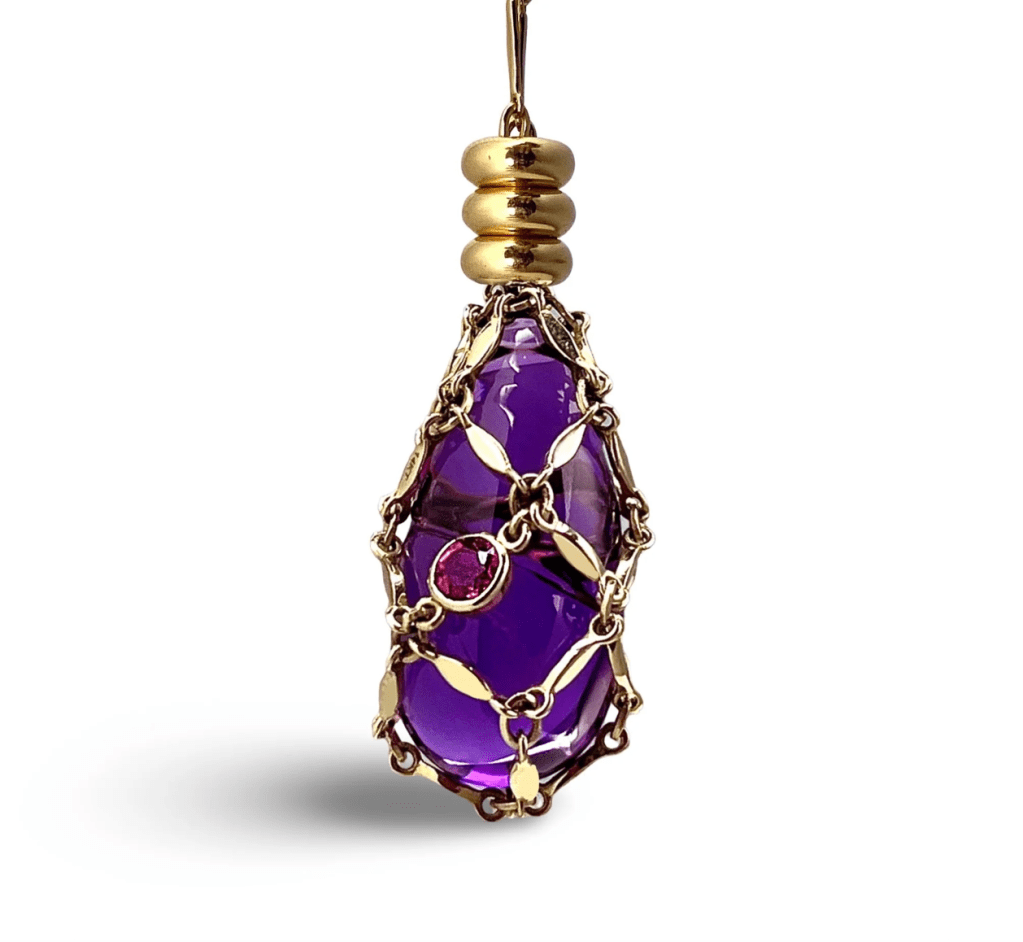
CB: Renata, your turn! Could you tell me why this project is important to you and why you decided to get involved?
Renata Cambaúva: Yes! This project is truly about being able to incorporate minerals that I trust and know the source of, and knowing that I’m making a difference—both with the project and within the industry. To me, it’s about making everything circular, and it makes me feel like we’re building a future that’s a bit more sustainable in an industry that doesn’t usually feel that way. I feel that our involvement in this project has created a lot more purpose and meaning to the creation of the necklace itself since I am donating 10% of all my sales to this project.
I’m also doing pro bono time designing and creating the pitch for the Academia alongside the founders of the project. It has also shown me how much more powerful we are in community, which is essentially the same concept as my necklace design: to build community and reconnect to the natural order of things. It’s about getting back to nature, learning about native communities, and preserving their values.
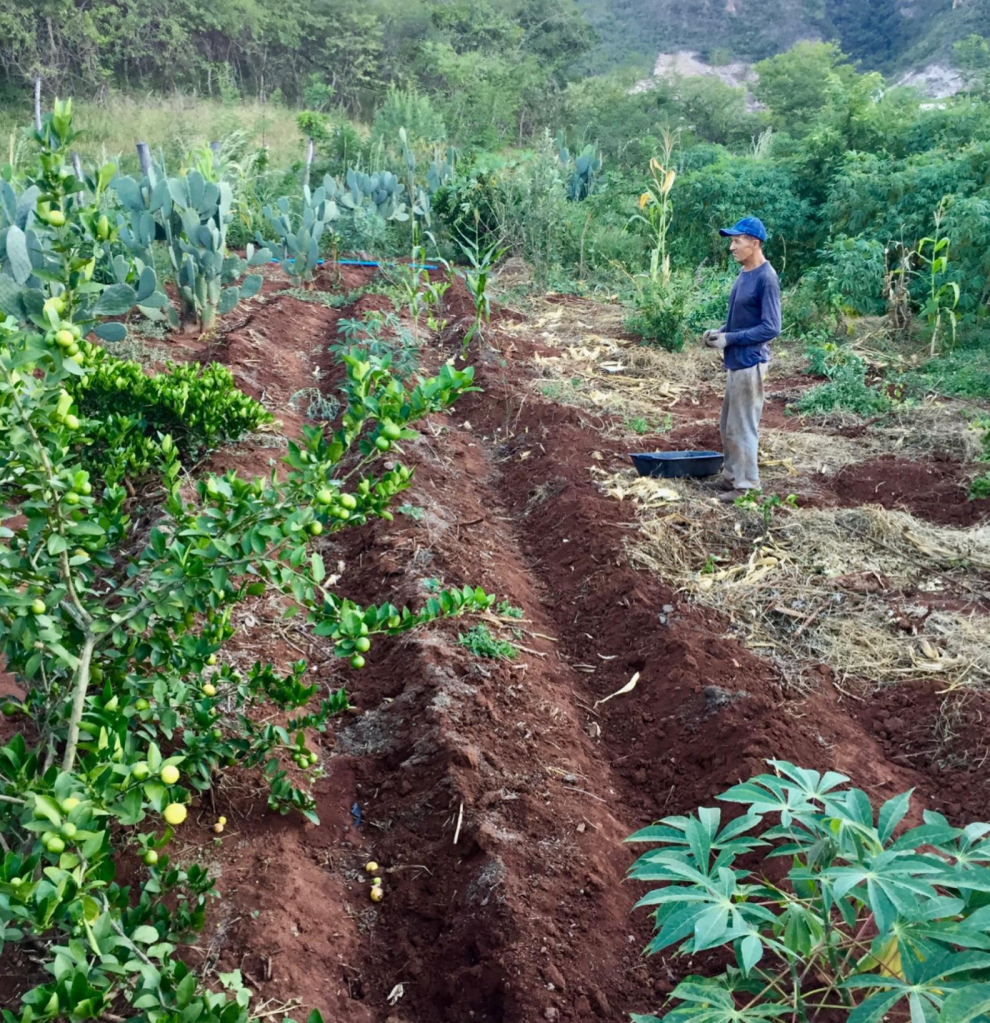
Preserving the land is also key, and at this point, I feel that would involve the regeneration of soil so we are able to restore the natural system. This makes the land fertile again for cultivation and growing crops.
“The tropical latitude with the elevation offers a marvelous opportunity to introduce regenerative agriculture focusing on high value niche crops such as herb, spice, medicinal plants, coffee, strawberry, blackberries etc. in addition to the popular food crops of the region.” ~Academia da Serra
This past year, Gems Keep Giving, a nonprofit organization dedicated to supporting artisanal colored gemstone mining and cutting communities, raised $11,000 for Academia da Serra to be able to provide masks for miners as part of their PPE program. I truly hope this incredible support continues, and that other people can step up and help the Academia da Serra team accomplish their fundraising goals and initiatives.
Keep sparkling, dear reader.
Onwards and upwards,
Chloe Beaumont
 Gemerocity